Robotic Ordnance Inerting
A World-First Robotic Inerting Capability
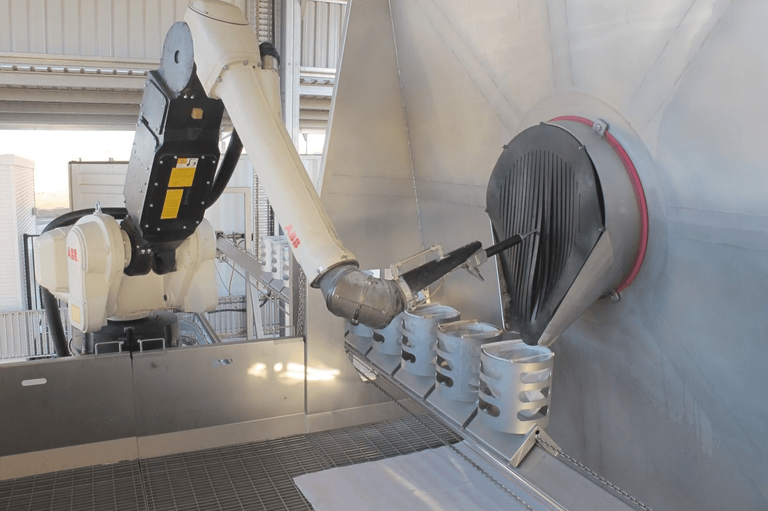
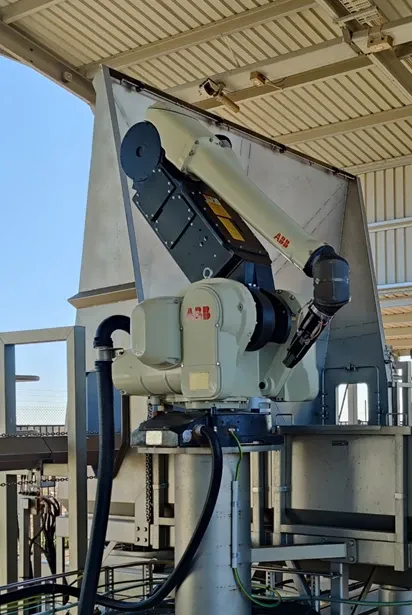
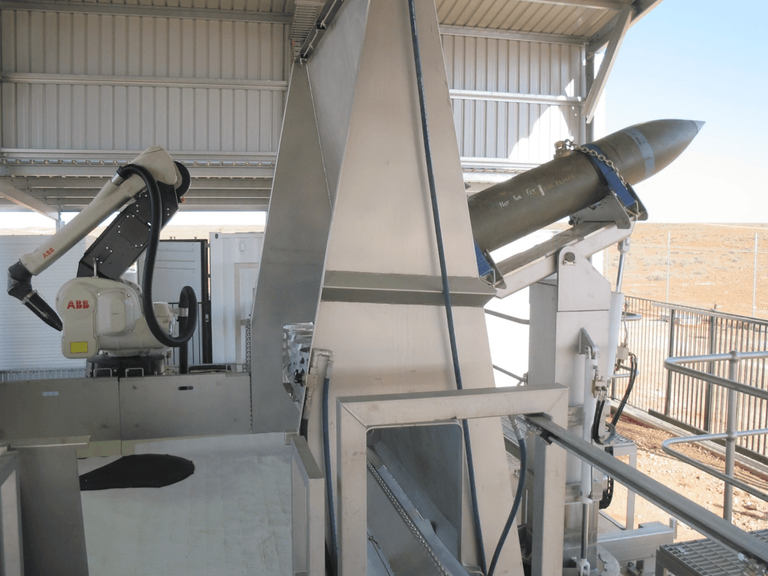
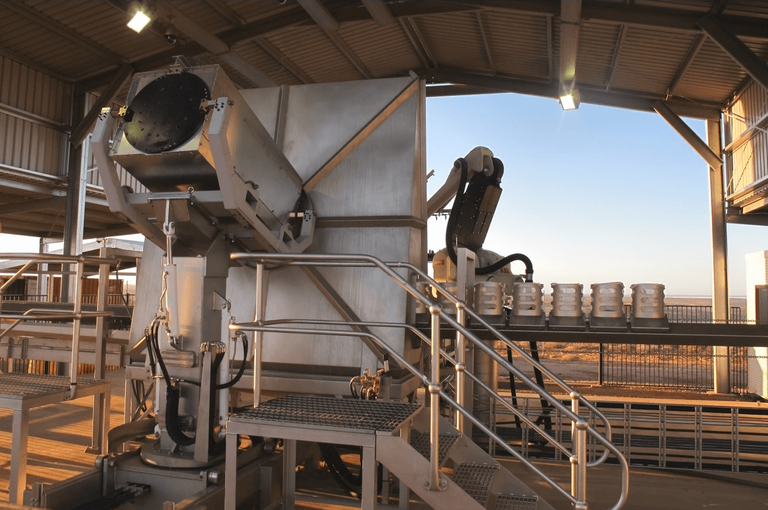
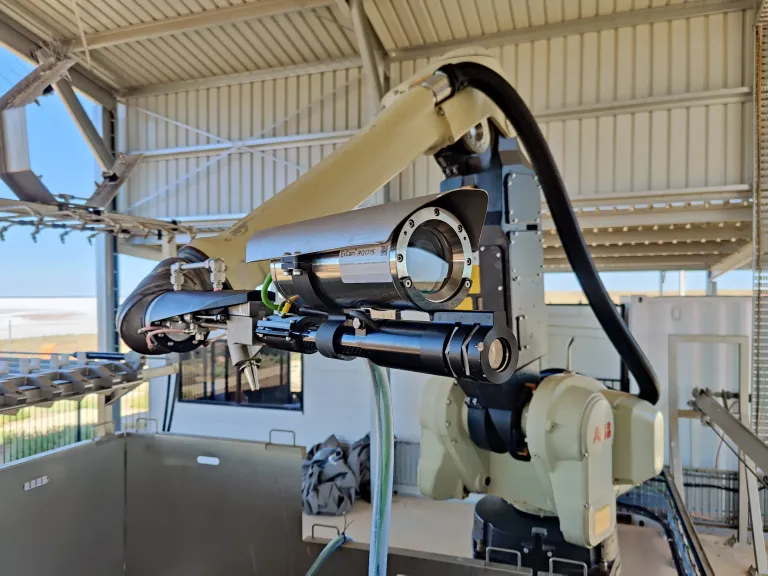
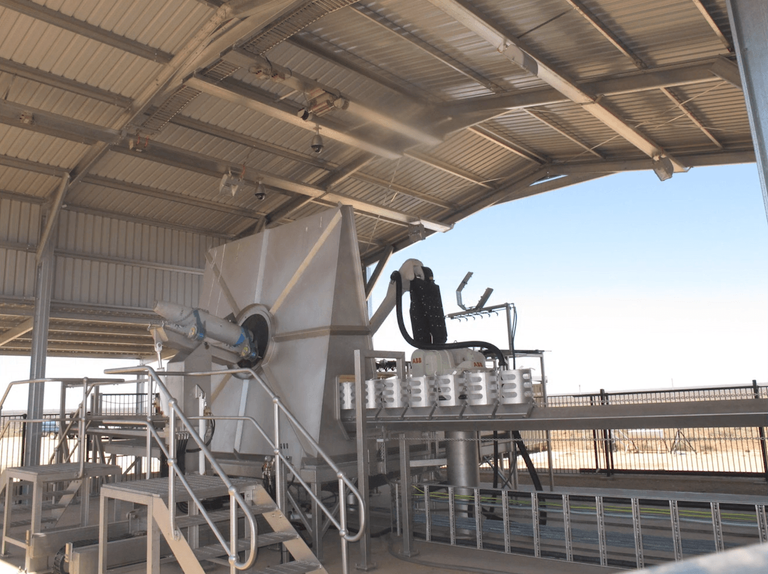
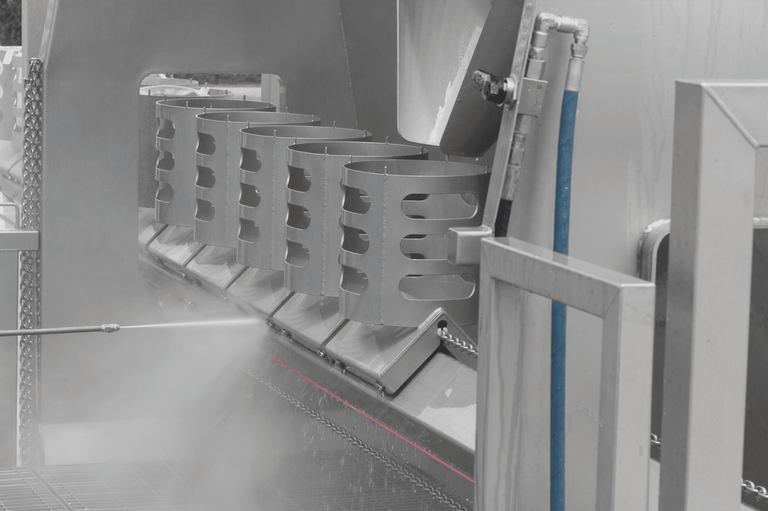
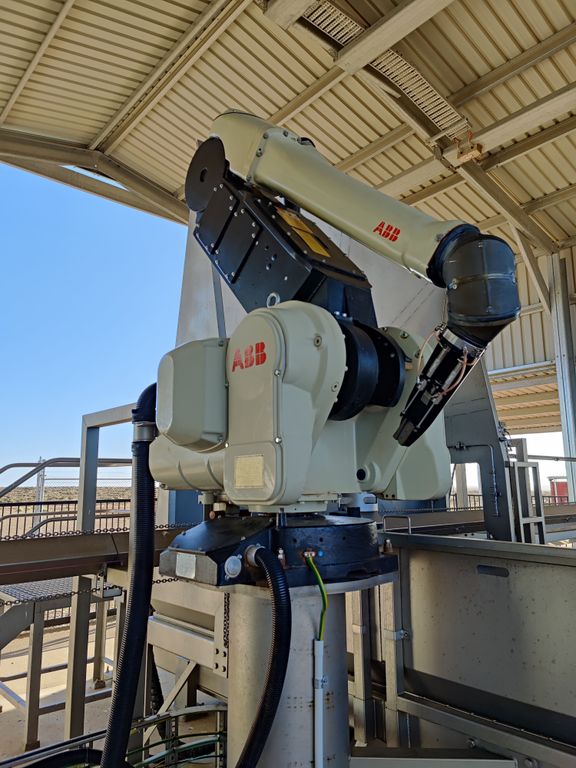
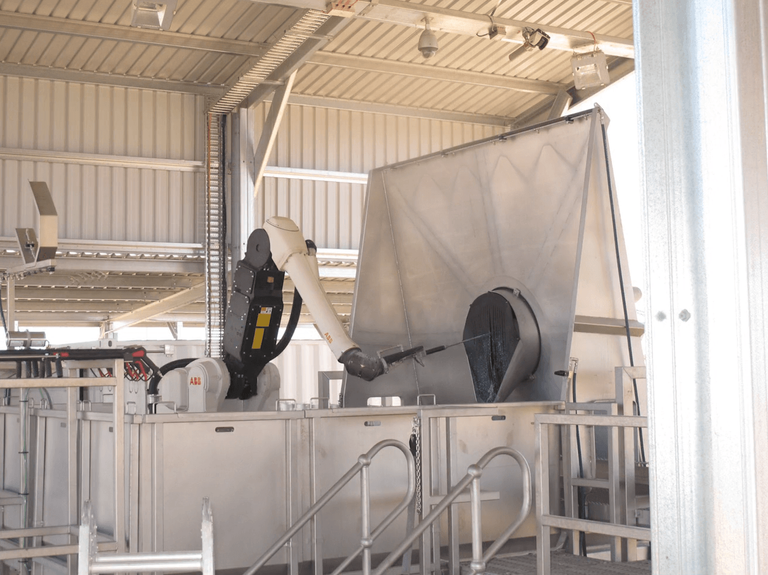
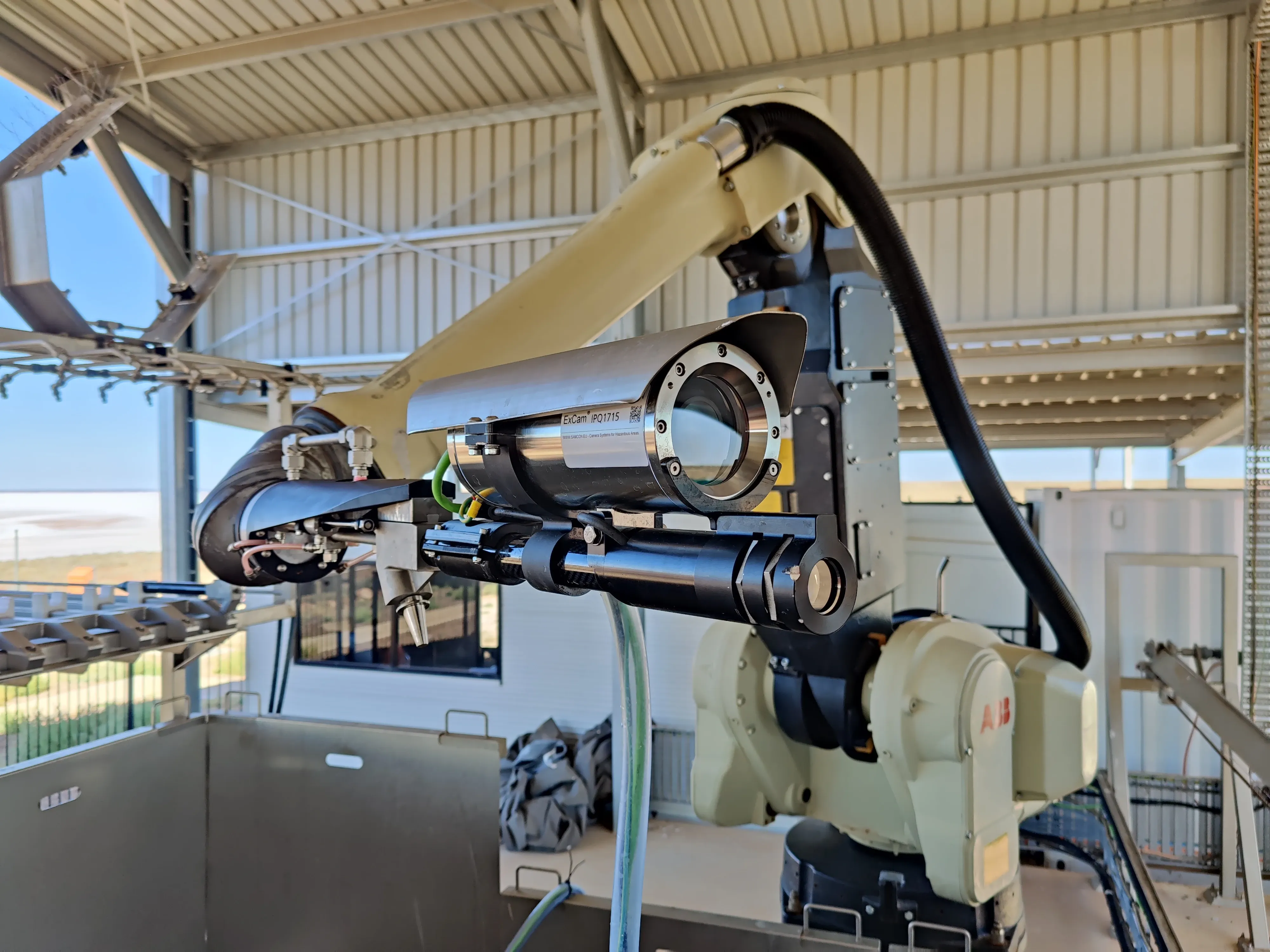
This cutting-edge robotic system provides a semi-automated and remote operating capability for inerting explosive ordnance. The facility reduces the need for a human operator to remove explosive material using high-pressure water jets. Instead, the operator supervises and controls the system from a safe location 1.5 km away, with the result a dramatic improvement in safety and efficiency.
The Challenge
Working in the desert in the Woomera test range in South Australia, Defence Science and Technology Group (DSTG) technicians were subject to harsh environmental conditions, high physical demands, hazardous materials, and explosive risks while processing ordnance such as aircraft bombs and artillery shells. A tender process was launched for a turnkey design and build of a facility to automate as much of the process as possible, improving safety and productivity.
The Approach
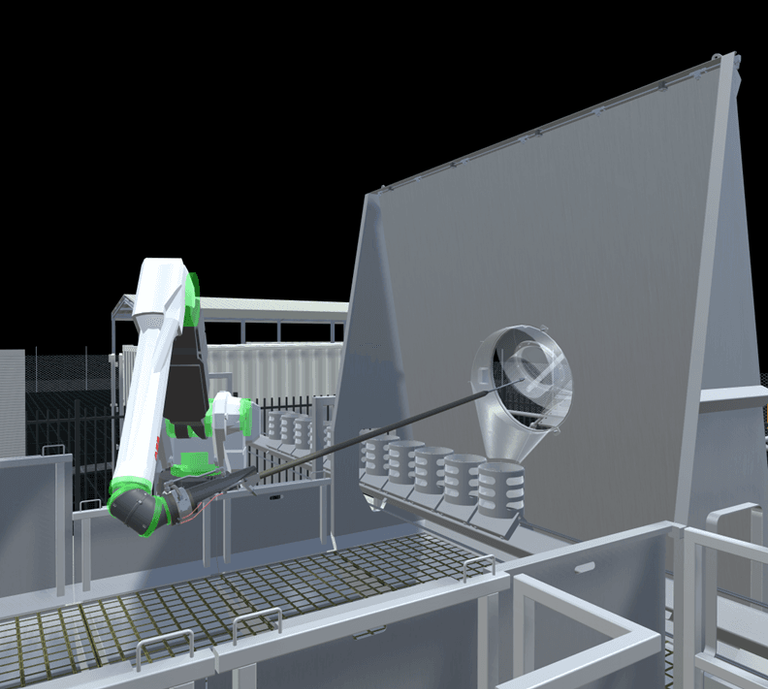
The Pipar team fully designed the facility in a 3D digital twin environment as part of the tender submission, ensuring the concept design would address all of DSTG's requirements and helping visualise how the robotic inerting process would work, which also helped gain internal support within Defence.
Upon project commencement, the digital twin was honed up as more operational requirements were specified and detailed design was completed, but it remained true to the original concept design. Due to the harsh environment and remote nature of the facility, all subsystems, including pneumatic, high- and low-pressure water, hydraulic and filtration, were comprised of two fully redundant skids, ensuring the highest possible overall system reliability.
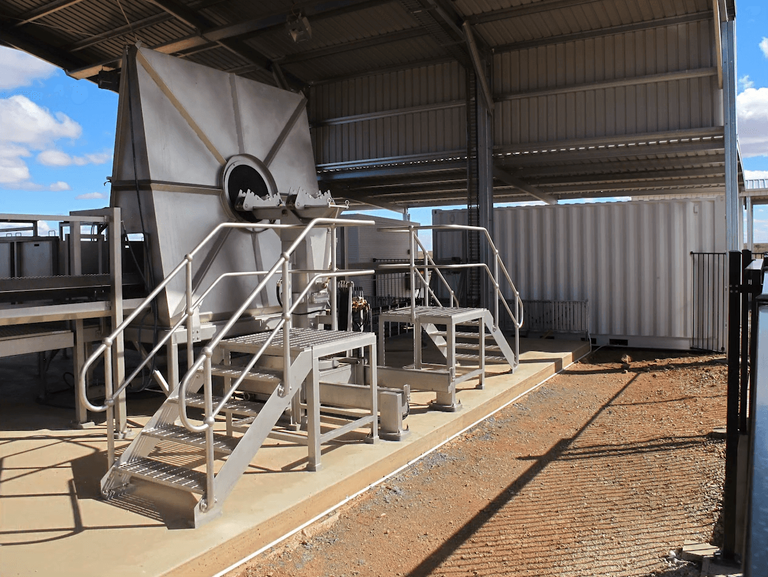
The facility was designed with containerisation in mind, fully assembled in Brisbane for factory testing, which included thorough testing of all subsystems and culminated in mock-inerting of test articles, before being shipped to Woomera for site installation.
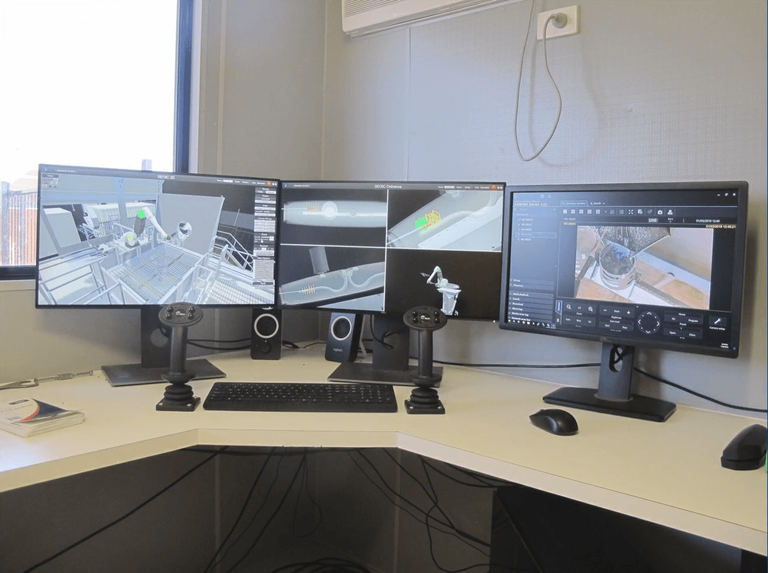
The digital twin also serves as the user interface, which can be operated from a local configuration station or a safe, remote operation station. Together with multiple cameras, operators have full control and visibility over the inerting process.
The Point of Difference
Pipar de-risks complex automation projects at the proposal stage by developing engineering-grade concepts, covering mechanical design, sensing, control, and integration, so performance, interfaces, and costs are understood before construction begins. For DSTG, this approach enabled rapid delivery and commissioning with minimal rework or rethinking, resulting in a world-class facility that exceeded all operational requirements from day one.
The project won a Comcare WH&S Safety Award in 2021 for enhancing personnel safety.
Project Gallery