Hydraulic Crane Automation
Precision Crane Automation for Solar Thermal at Scale
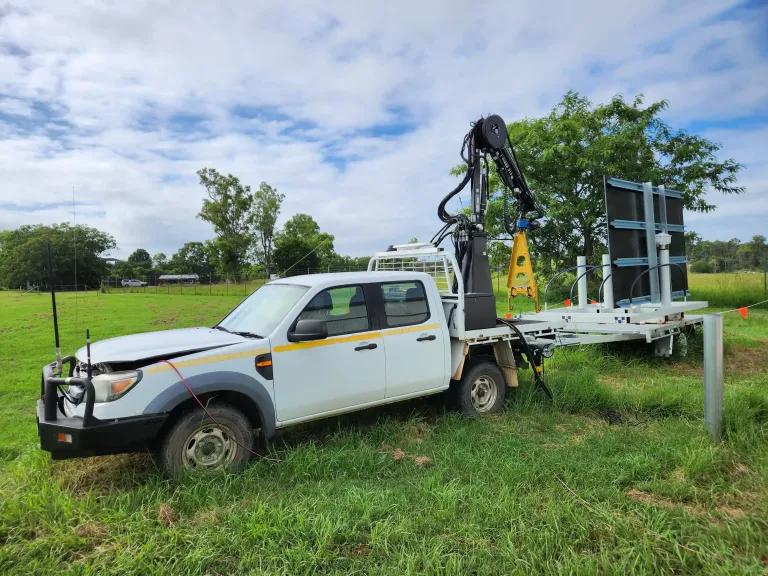
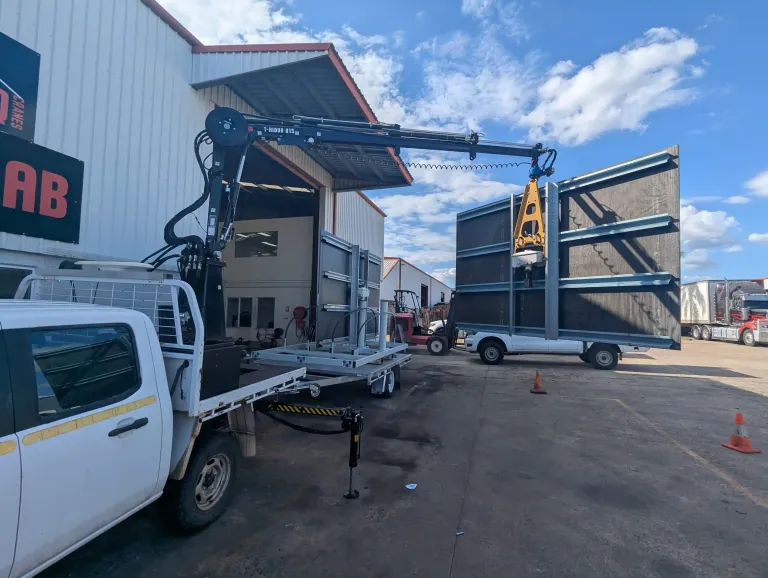
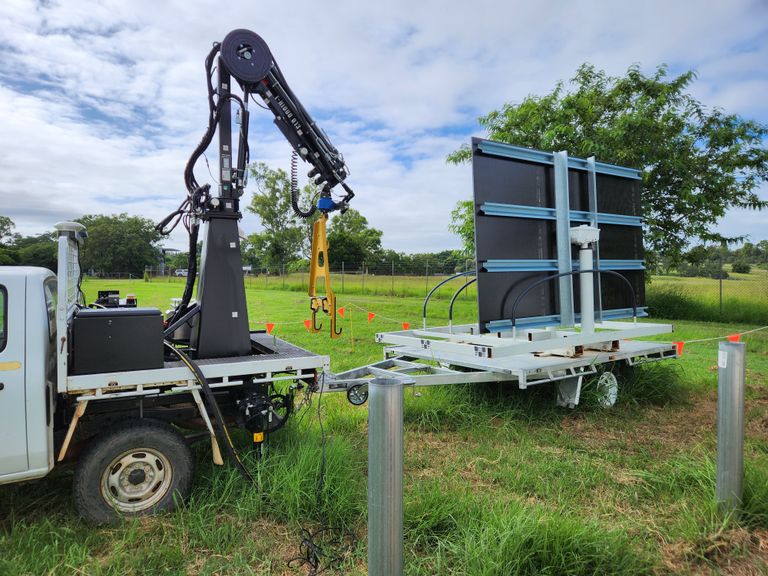
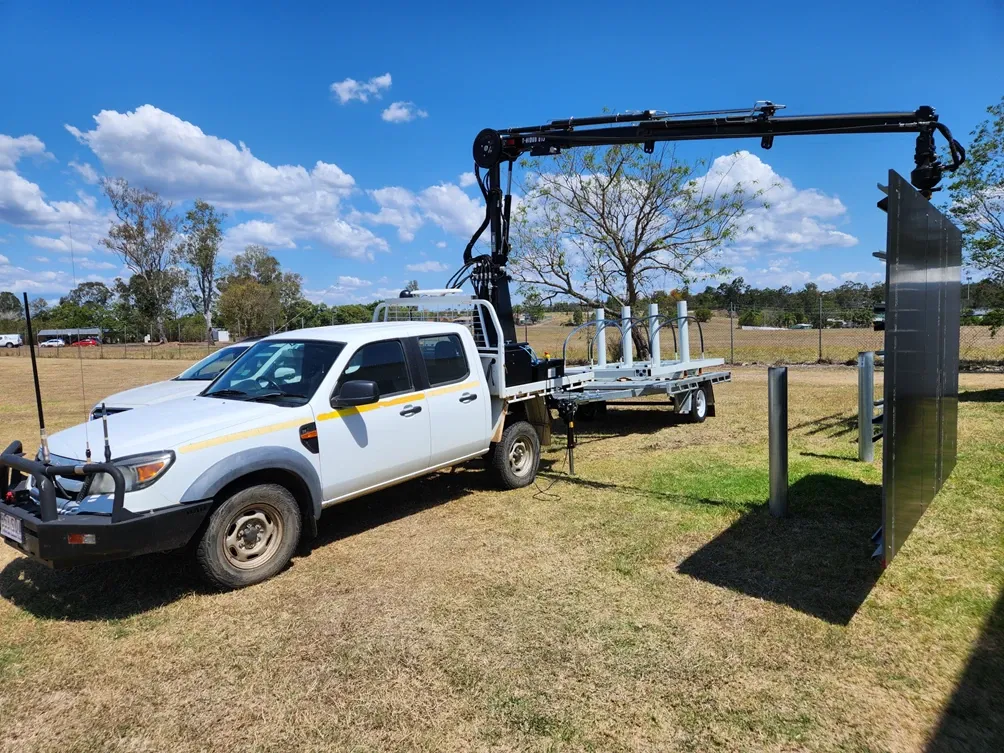
Pipar Automation developed an automated crane system to accelerate heliostat installation at a solar thermal power plant. The system transformed a standard knuckle-boom crane into a sensor-guided, semi-autonomous installation platform, using GPS, lidar, computer vision, and a real-time digital twin to pick mirrors from a transport rack and place them onto field posts with minimal operator input.
Problem
In 2023, Pipar was approached to help de-risk the installation of heliostats for a concentrated solar thermal power plant. The facility required thousands of mirrors to be placed onto field posts. This task, if performed manually with conventional cranes, is slow, labour-intensive, and requires multiple skilled operators per crew. An installation solution was needed that was fast, accurate, safe around previously installed mirrors, and could ultimately scale to production deployment.
Approach
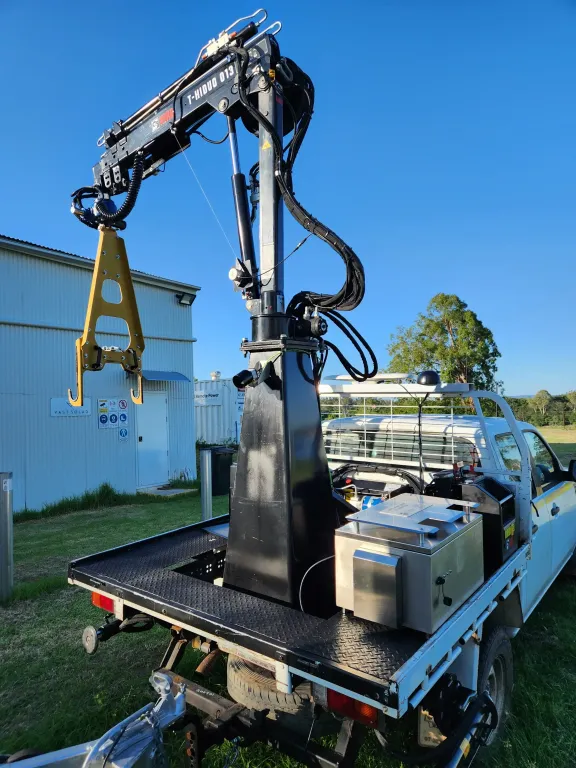
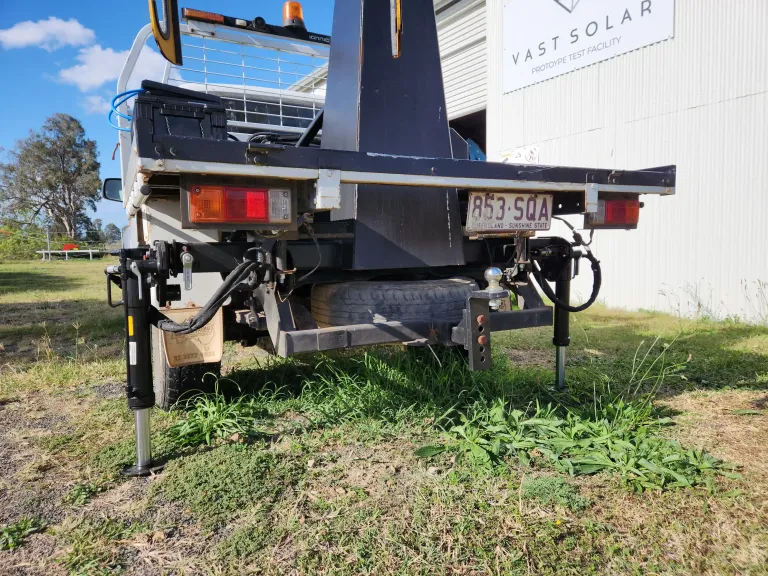
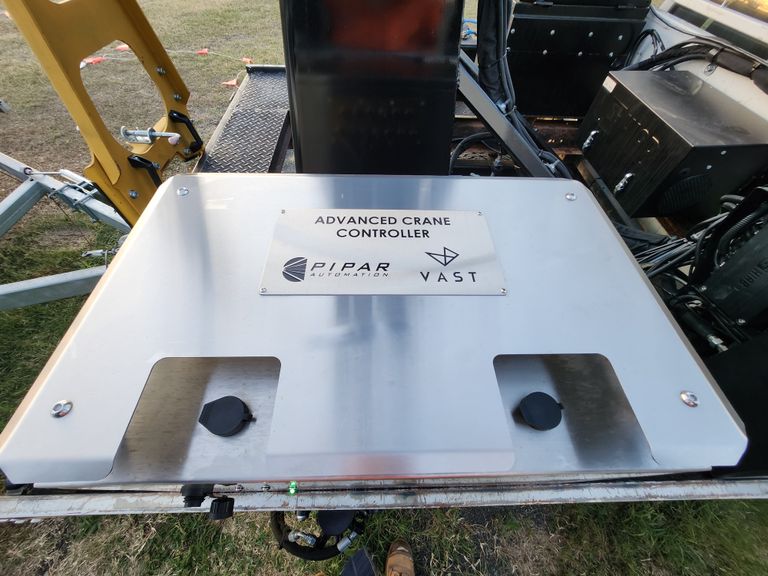
Pipar delivered the project in progressive phases, beginning with a proof-of-concept system built around a HIAB T-HiDuo 013 crane mounted to a ute. To enable full electronic control of the crane from Pipar's automation computers, the team developed a custom communications interface, integrating an industrial compute platform with bespoke control electronics tailored to the crane's native hydraulic system.
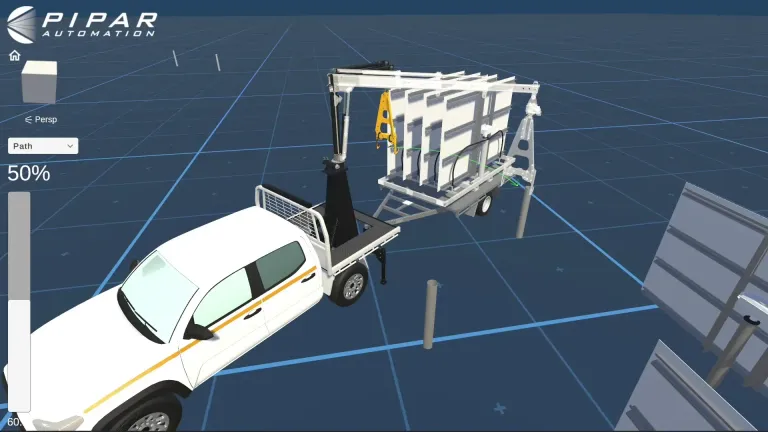
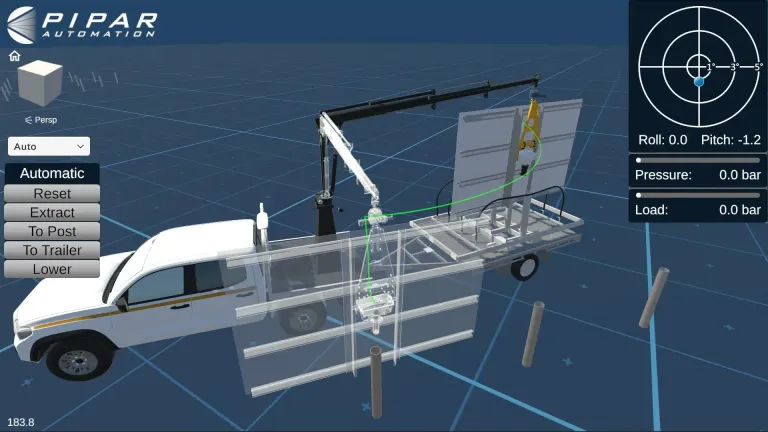
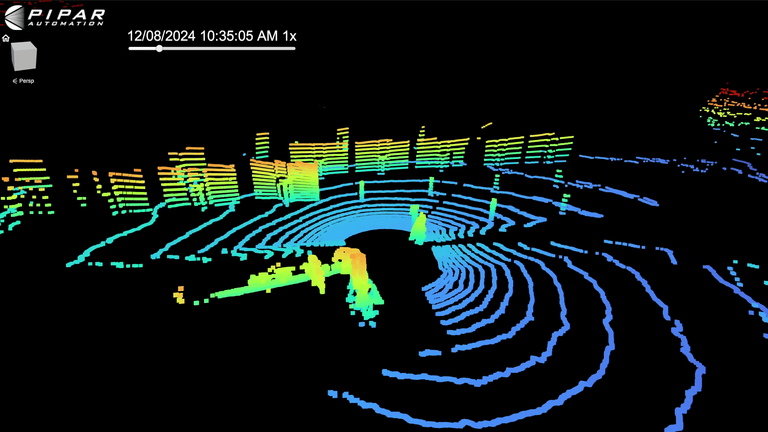
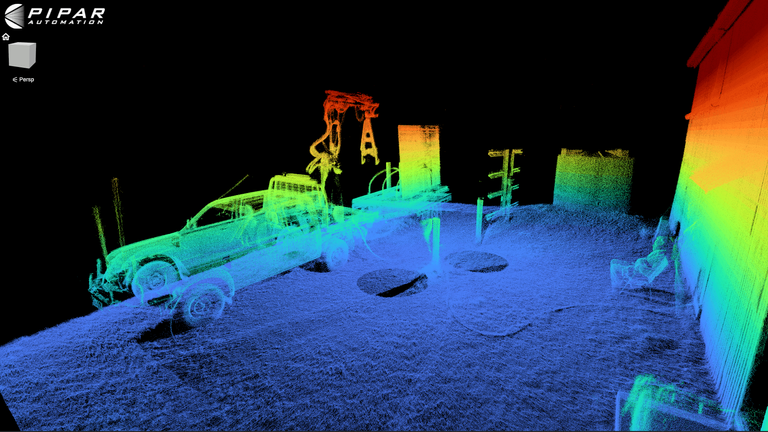
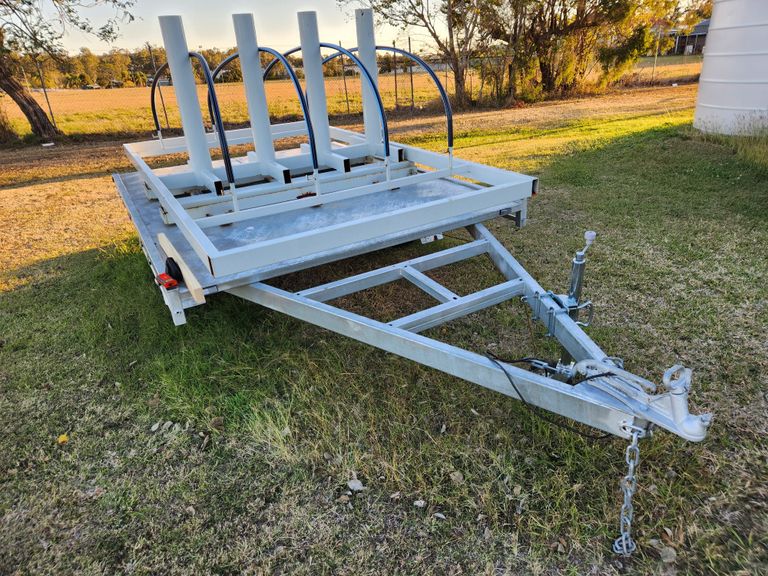
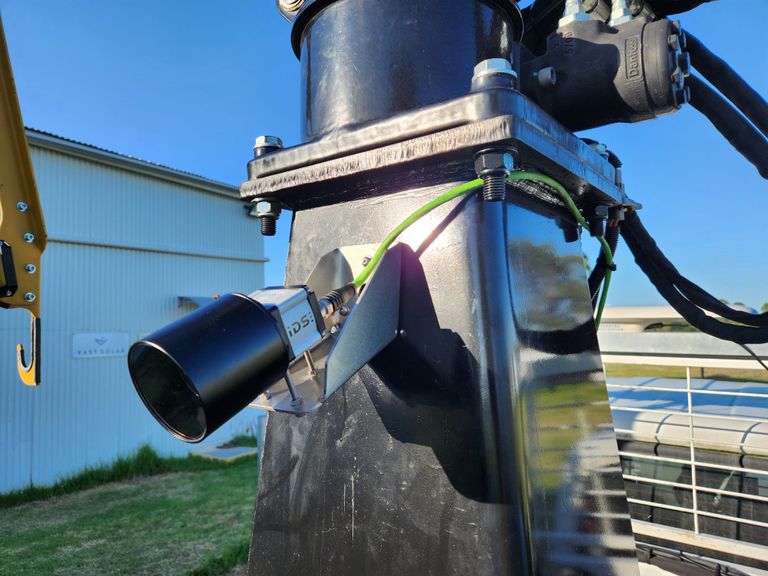
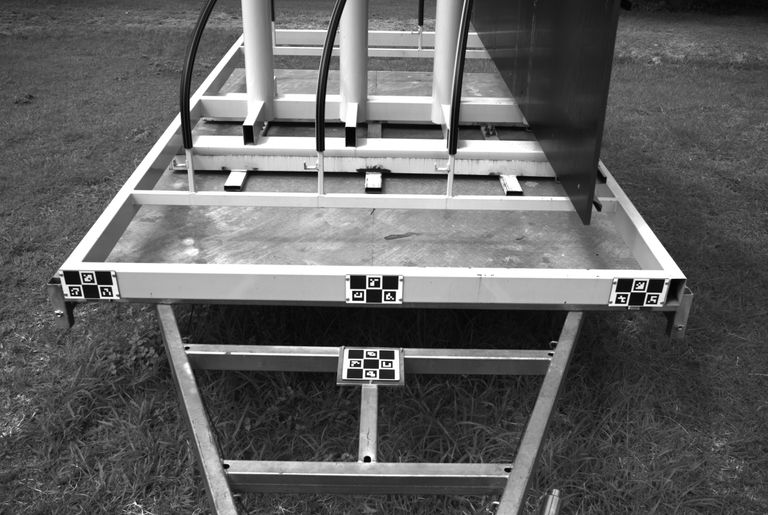
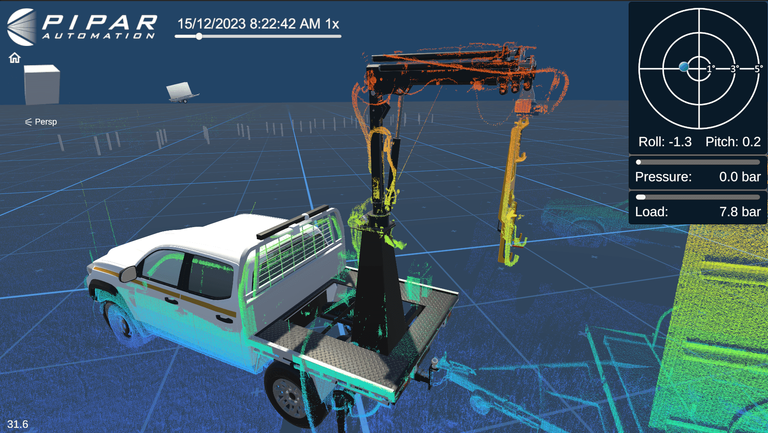
From there, the team instrumented every articulation of the crane (slew, tilt, extend, and rotate) with high-fidelity feedback sensors, added an RTK-corrected dual-antenna GNSS system for global positioning, a digital inclinometer for auto-levelling the stabiliser legs, and a computer-vision-based pose estimation system for locating the heliostat trailer. A real-time digital twin was developed to visualise the crane's state and intended motion, giving operators intuitive control through a touchscreen interface while the system handled path planning and collision avoidance in the background.
The final system integrated pressure-compensated hydraulic valves with closed-loop spool control, delivering the precise, repeatable motion required for sensitive pick-and-place operations around fragile, previously installed mirrors. End-to-end demonstrations showed the system completing full heliostat pick-and-place cycles in under four minutes, and with the majority of steps running fully autonomously, which validated the approach as a viable path to production-scale heliostat deployment.
Outcome
The delivered system demonstrated that large-scale heliostat installation could be meaningfully automated using a sensor-instrumented crane, a real-time digital twin, and intelligent path planning. Full pick-and-place cycles were completed in under four minutes, with stable motion and accurate path-following. The project proved that complex, safety-critical field installation tasks can be reliably handled by an automated platform. This laid a technical foundation that is directly transferable to future solar thermal, renewable energy, and heavy-equipment automation projects.
Project Gallery